
A Stop at Café Loki
Food, a local porter, and the painted stories on the walls of Café Loki.
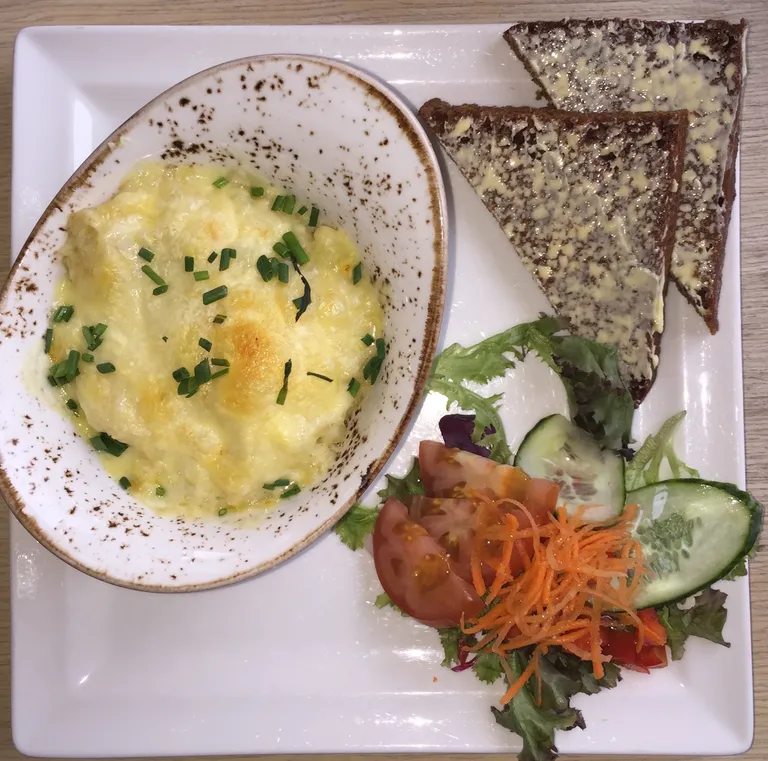
Nestled in the heart of Reykjavik, Café Loki is more than just a café. It’s a gateway to Icelandic traditions, where visitors savor the flavors of authentic dishes while immersing themselves in the rich tales of Norse mythology. From homemade rye bread ice cream to the gripping stories of Loki and Ragnarök, this café offers a unique cultural experience.
Traditional Icelandic Cuisine#
At Café Loki, the menu reflects Iceland’s culinary heritage. Guests can indulge in:
- Plokkfiskur: A gratinated mashed fish dish served with fresh rye bread and salad, paired perfectly with a local Einstök Ölgerð Icelandic toasted porter.
- Rye Bread Ice Cream: A sweet delight that encapsulates the essence of Icelandic flavors.
- Fermented Shark and Brennivín: For the adventurous palate, try this iconic pairing of hákarl with Iceland’s traditional schnapps.
Norse Mythology in the Ambiance#
The walls of Café Loki are adorned with vibrant paintings that narrate the tales of Norse gods and giants. These stories bring the café’s namesake, Loki, to life.
Norse mythology is preserved in works such as the Prose Edda by Snorri Sturluson, an Icelandic historian and poet. Its stories describe different worlds inhabited by gods, humans, and giants. Bifröst, the rainbow bridge, connects earth and heaven. Its burning red band helps keep the giants from crossing into the gods’ world. The gods and giants often struggle against each other, with Thor defending the gods using his hammer, Mjölnir.
The wall painting offers a glimpse of stories from the life of Loki Laufeyjarson. His father was the giant Fárbauti, and his mother was Laufey. The gods made an agreement with a builder (3), who concealed his identity as a giant, to build a wall around their city (4). They promised him Freyja as his wife if he finished within one winter. They believed the deadline would be impossible to meet. With only three days left before summer, however, the wall was nearly finished because of the strength of the builder’s horse, Svadilfari (2). The gods demanded that Loki find a solution. Loki turned himself into a mare (1) and lured Svadilfari away from his work. Later, Loki gave birth to an eight-legged foal named Sleipnir, who became Odin’s horse.
Baldur (5) was handsome and much loved among the æsir, and Loki envied him. Baldur’s mother, Frigg, had taken an oath from living and inanimate things in the world never to harm him. The exception was mistletoe, which had not sworn an oath. It became a game among the gods to throw weapons and sharp objects at Baldur, because they could not hurt him. Then Loki (6) approached the blind god Hödur (7), placed mistletoe in his hand, and guided his throw. The mistletoe struck Baldur and killed him.
Read these stories in the Prose Edda.
The gods were furious with Loki after Baldur’s death. Loki turned himself into a salmon and hid in a river. The æsir dragged a net through the water to catch him. When Loki tried to leap over it, Thor caught him. Loki slipped through Thor’s hand until the grip stopped at his tail. In the story, this explains the salmon’s tapering shape. Loki was then bound in a cave, with a snake (9) above him dripping venom toward his face. His wife, Sigyn (10), held a bowl beneath the snake to catch the venom and protect him.
Ragnarök, shown on the right side of the painting, brings the destruction of the world. Bonds break, setting prisoners free, including Loki (11) and his son Fenrisúlfur (12). Brothers turn against each other, the sun goes dark, and fire consumes the world. But the story also promises renewal. Gimlé is a hall in the highest heaven, beyond the reach of the flames, where the righteous will live. The earth becomes green again, some gods survive or return, and human life begins anew.
Visitor information#
- Address: Lokastígur 28, 101 Reykjavík, Iceland
- Phone: +354 466 2828
- Email: loki@loki.is
- Website: loki.is